
Galvanic corrosion occurs when two dissimilar metals are electrically connected in the presence of an electrolyte — water, condensation, seawater or process fluid. The less noble metal (anode) corrodes at an accelerated rate while the more noble metal (cathode) is protected. In pipe clamp assemblies, three metals meet: the bolt and nut, the clamp body, and the pipe wall. If these metals are far apart in the galvanic series and the joint is exposed to moisture, the weakest link corrodes — often the bolt head or the contact ring on the pipe, which are the smallest exposed areas and therefore corrode fastest. This article explains how to match fastener materials to clamp body and pipe materials to prevent galvanic failures in service.
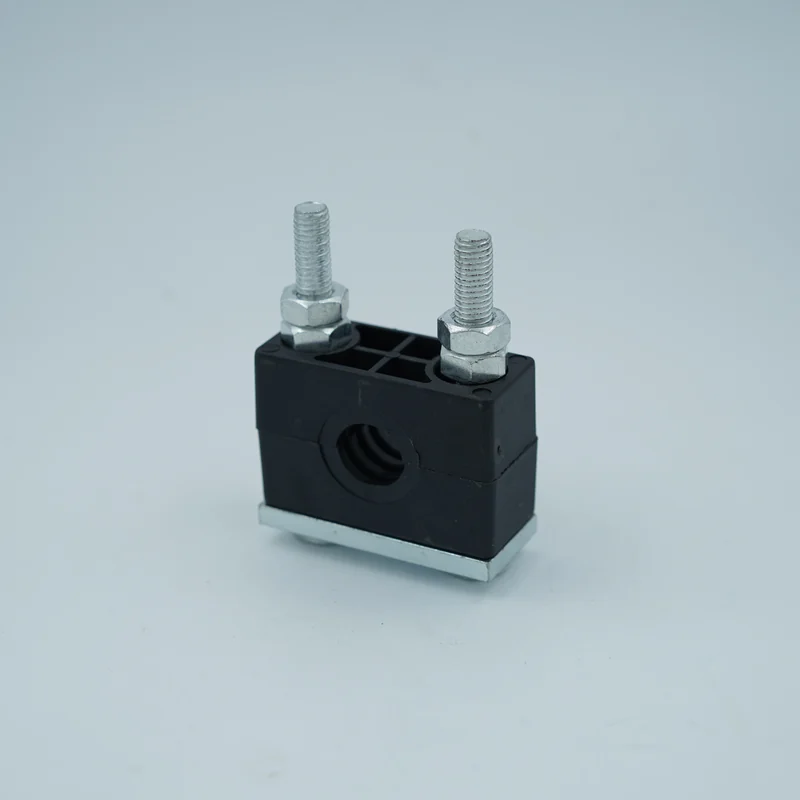
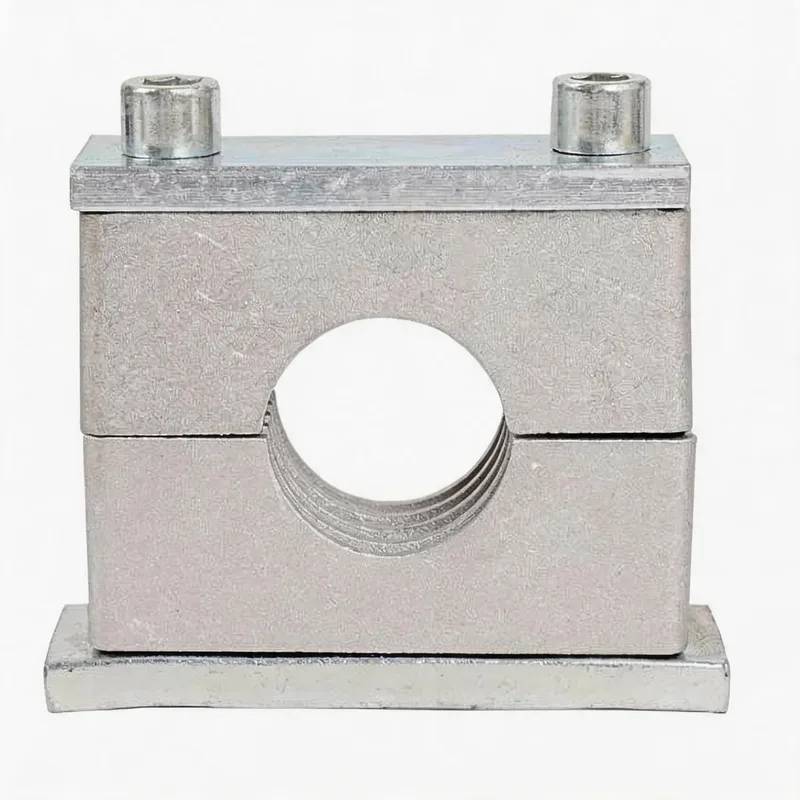
Related product photos
Key points
- Galvanic series ranking determines which metal corrodes — the anode (less noble) always sacrifices itself
- Area ratio matters: a small anode (bolt) paired with a large cathode (clamp body) corrodes much faster than the reverse
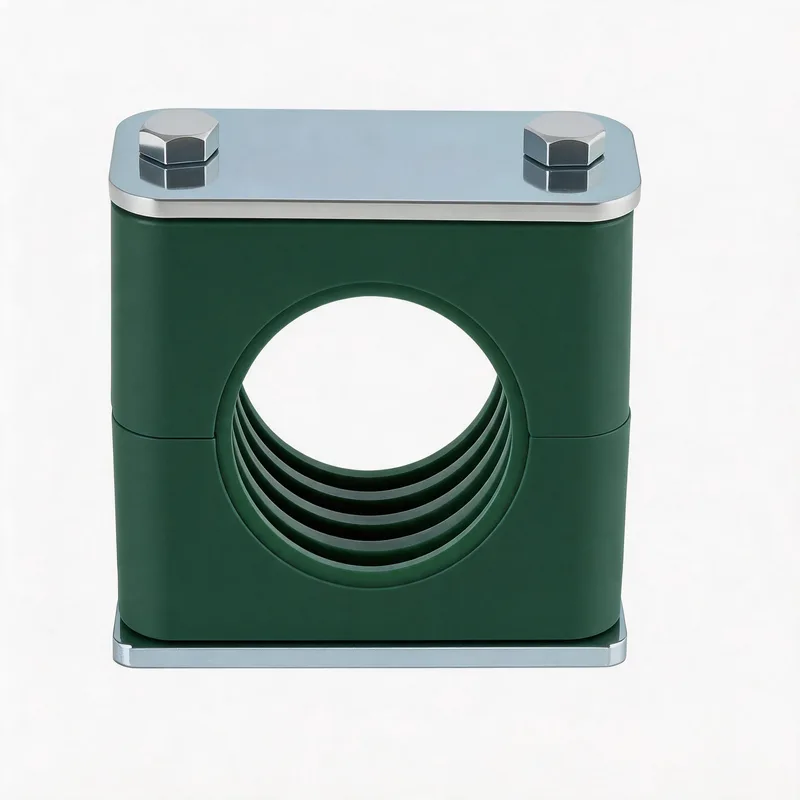
- PP and PA polymer clamp bodies eliminate galvanic contact between bolt and pipe by design
- Isolating washers, sleeves or coatings are required when all-metal assemblies pair dissimilar metals
| Combination | Galvanic Risk | What Corrodes | Mitigation |
|---|---|---|---|
| Zinc bolt + zinc-plated steel clamp + carbon steel pipe | Low | Zinc coating sacrifices slowly — acceptable | None needed — matched metals |
| Zinc bolt + 316L stainless clamp | High | Zinc bolt head corrodes rapidly — small anode, large cathode | Use A4-80 stainless bolts to match clamp body |
| A2-70 bolt + carbon steel pipe (no liner) | Moderate | Pipe wall at contact ring corrodes — bolt is cathode | Use PP/PA body or rubber-lined clamp to isolate |
| A4-80 bolt + 316L clamp + stainless pipe | None | All metals matched — no galvanic cell | Ideal pairing for marine/chemical service |
| HDG bolt + aluminium clamp | Moderate | Aluminium clamp corrodes around bolt hole — aluminium is anodic to zinc | Use stainless bolt with nylon isolating washer |
Galvanic risk depends on the electrolyte severity — indoor dry service has lower risk than outdoor coastal or chemical splash zones even for the same metal combination.
The galvanic series and pipe clamp metals
The galvanic series ranks metals and alloys by their electrode potential in a given electrolyte (usually seawater, as a worst-case reference). From most anodic (active, corrodes first) to most cathodic (noble, protected): magnesium → zinc → aluminium → carbon steel → cast iron → lead → tin → nickel → brass → copper → 316 stainless (passive) → titanium → graphite. Two metals far apart in this series create a strong galvanic cell when connected in a wet environment. Two metals close together create a weak cell with negligible corrosion. In pipe clamp practice, the common metals span a significant range: zinc coatings and aluminium at the active end, carbon steel in the middle, and stainless steel and copper at the noble end. The first step in avoiding galvanic problems is to check where your bolt material, clamp body material and pipe material sit relative to each other in this series.
Area ratio: why bolt heads corrode first
Galvanic corrosion rate is governed not only by the potential difference between metals but also by the area ratio between anode and cathode. A small anode connected to a large cathode corrodes extremely fast because the entire corrosion current concentrates on a small area. A large anode connected to a small cathode corrodes slowly and uniformly. In a pipe clamp assembly, the bolt head and nut faces are the smallest exposed metal surfaces, while the clamp body and pipe wall together form a much larger surface. If the bolt is the anodic material (for example, a zinc-plated bolt in a stainless steel clamp), the unfavourable area ratio accelerates bolt head corrosion dramatically — field failures with completely dissolved bolt heads within 12–18 months are documented in coastal and offshore environments. The same combination in reverse (stainless bolt in a zinc-plated clamp) would cause the larger clamp body to corrode, but more slowly and with more uniform wastage because the anode area is large. This is why material selection for the smaller component (the bolt) is disproportionately important.
Polymer clamp bodies as natural galvanic barriers
PP (polypropylene) and PA (polyamide/nylon) clamp bodies used in DIN 3015 Part 1 standard series and many cushioned clamp designs are electrical insulators. They physically separate the metal bolt/nut from the pipe wall, breaking the electrical path that galvanic corrosion requires. This is why galvanic corrosion between bolt and pipe is not a concern in standard PP or PA clamp assemblies — the polymer body does the isolation automatically, regardless of what bolt material and pipe material are used. The galvanic issue arises only in all-metal assemblies: DIN 3015 Part 2 heavy series clamps with steel or stainless steel bodies, U-bolt clamps, and metal tube clamps where the bolt or clamp body contacts the pipe directly. When specifying a metal clamp for a dissimilar-metal pipe (for example, a carbon steel heavy series clamp on a copper pipe), galvanic isolation must be provided by a rubber or PTFE liner, isolating bushings or a dielectric coating.
Matching bolt finish to environment severity
The coating on the bolt serves two purposes: it provides sacrificial or barrier corrosion protection, and it determines where the bolt sits in the galvanic series. A zinc-plated bolt behaves as zinc on the surface — it is anodic to steel and stainless. A hot-dip galvanized bolt has a thicker zinc layer (45–85 µm versus 5–12 µm for electro-zinc) and therefore provides longer sacrificial life but the galvanic position is the same. A Dacromet/Geomet-coated bolt has a zinc-aluminium flake layer that is also anodic but more resistant to white rust than pure zinc. For indoor dry environments (mechanical rooms, factory interiors without washdown), zinc-plated bolts with zinc-plated steel clamps work without galvanic concerns. For outdoor, coastal or washdown environments, either match all metals to stainless (A4-80 bolts, 316L clamp bodies, stainless pipe) or use polymer-bodied clamps that eliminate the galvanic path. The worst-case scenario is mixing a single zinc-plated bolt into an otherwise all-stainless assembly in a marine environment — that bolt becomes the sacrificial anode for the entire assembly and can fail in months.
Isolation methods for dissimilar-metal assemblies
When an all-metal clamp must be used on a dissimilar pipe and galvanic corrosion is a risk, several isolation methods are available. Rubber or elastomer liners (NBR, EPDM) bonded or inserted into the clamp bore provide both vibration damping and galvanic isolation between the clamp body and the pipe. PTFE tape or PTFE bushings can isolate bolt shanks from clamp body holes when the bolt and body are different metals. Nylon or fibre isolating washers placed under bolt heads and nut faces break the electrical path at the fastener-to-body interface. Dielectric coatings (epoxy, polyester powder coat) applied to the clamp body create a barrier between the body and pipe. In practice, the most reliable approach is to match all metals in the assembly — using mismatched metals with isolation adds complexity, inspection points and a failure mode that would not exist with matched materials. If isolation is used, inspect it regularly: a cracked rubber liner or a displaced washer restores the galvanic path.
RFQ data for galvanic-compatible fastener selection
Send clamp body material (PP, PA, carbon steel, 316L stainless, aluminium), pipe material and any coating on the pipe, service environment (indoor dry, outdoor sheltered, outdoor coastal, chemical splash, submerged), temperature range, any project specification for coating type or thickness (e.g. ISO 1461, ISO 19598), required certificate level (EN 10204 2.1 or 3.1), bolt size and quantity.
Related WeiQue series
Recommended reading
References
These pages summarize public standard metadata and industry application information. They do not reproduce the paid DIN standard text.