
Material choice is one of the most important decisions after pipe outside diameter and clamp series. The clamp body, insert, base plate, cover plate and fasteners may face different loads, temperatures and corrosion exposure.
For DIN 3015 style clamps, buyers often start with PP or PA bodies for hydraulic and pneumatic lines, then review metal, cushioned or stainless options when heat, vibration, chemicals or outdoor exposure become important.
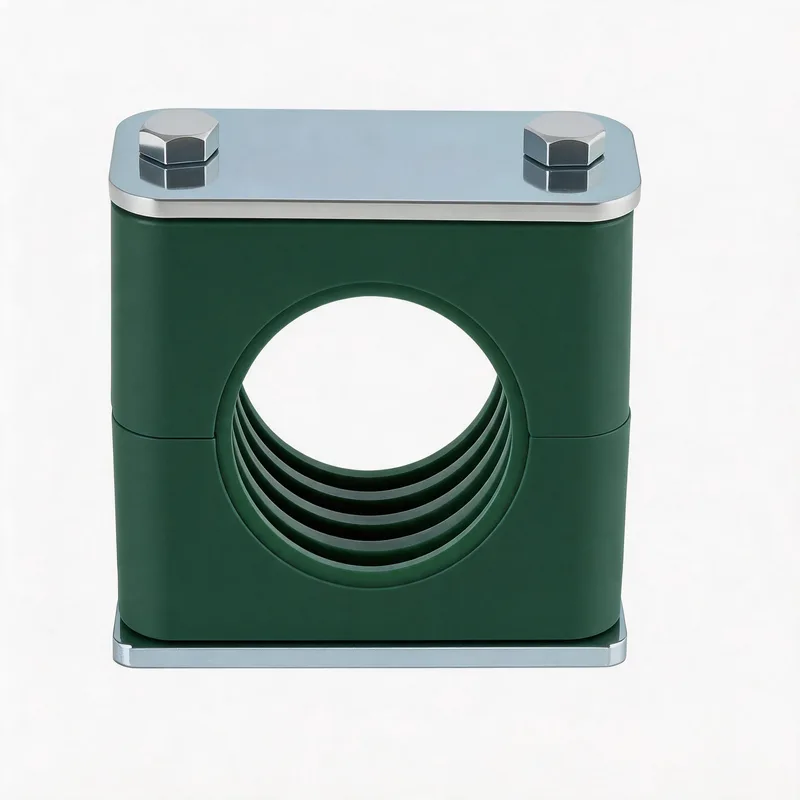
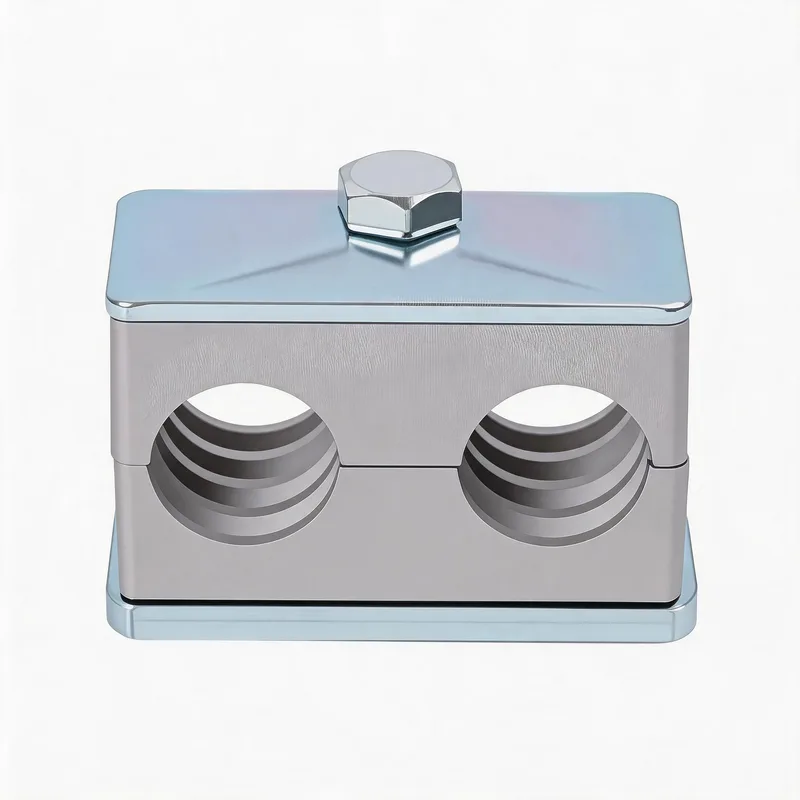
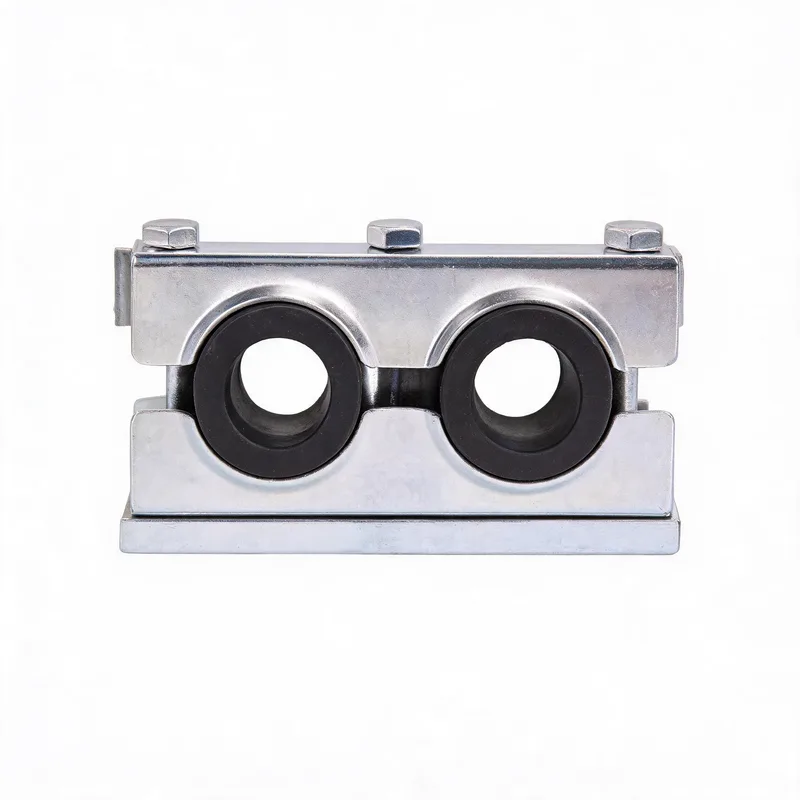
PP, PA, elastomer inserts and metal clamp bodies differ in temperature margin, toughness, chemical exposure and vibration behavior. Material must be checked against the exact fluid and environment.
Common pipe clamp material options
Typical use cases
- Use PP for many general hydraulic, pneumatic and industrial lines
- Use PA when toughness, temperature margin or mechanical demand is higher
- Use NBR or cushioned inserts for damping, but check oil, ozone and temperature exposure
- Use metal bodies for high heat, mechanical abuse or special installation requirements
- Use stainless or protected hardware for marine, washdown and corrosive environments
- Confirm material with fluid, temperature, UV exposure and project specification before release
PP clamp bodies
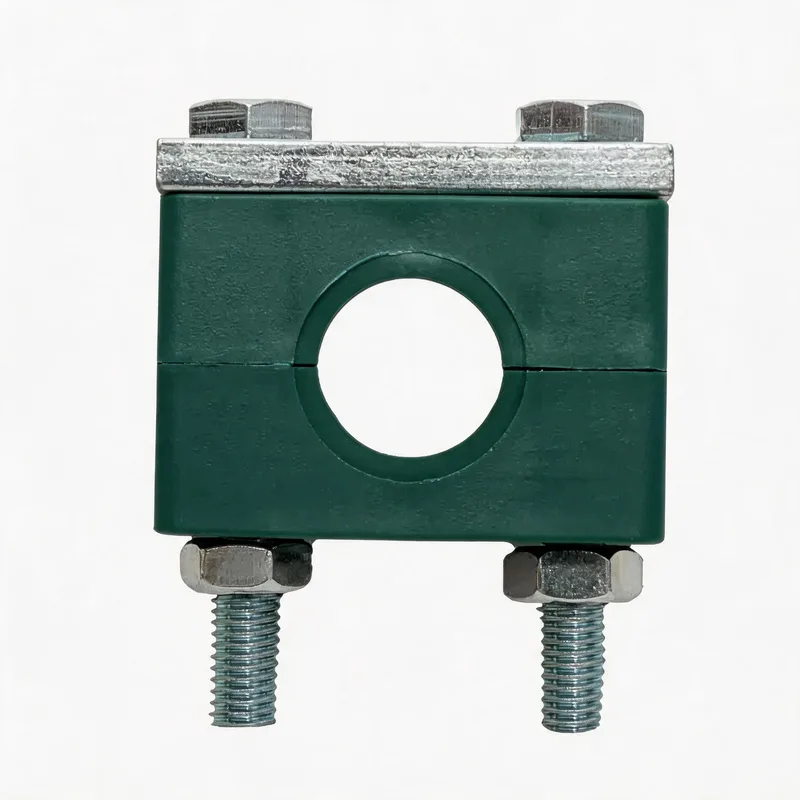
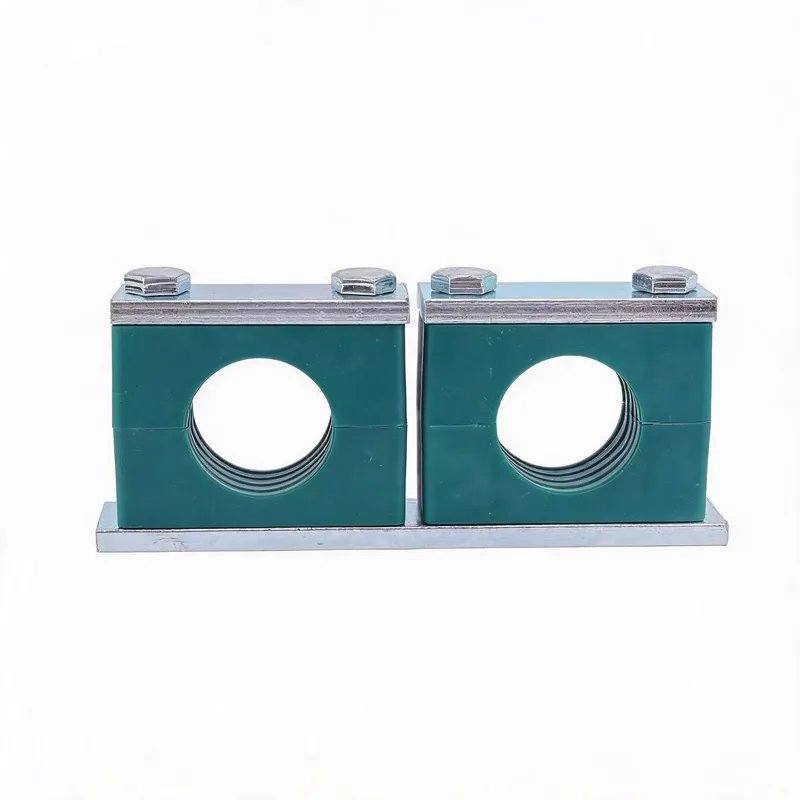
PP is a common starting material for DIN-style clamp bodies because it is economical, easy to assemble and suitable for many hydraulic-oil, pneumatic and general industrial environments. It is usually a good first choice when temperature, chemical exposure and vibration are moderate.
PA clamp bodies
PA is selected when the clamp needs better toughness, higher temperature margin or improved mechanical behavior compared with basic PP. It can be useful around mobile equipment, compact frames and installations where repeated vibration or handling is expected.
NBR and cushioned inserts
NBR and cushioned inserts help reduce vibration, noise and pipe movement, especially around pumps, cylinders and mobile machinery. The insert must still be checked against oil type, fuel exposure, ozone, outdoor service and operating temperature.
Metal and aluminum bodies
Metal or aluminum bodies may be used where temperature, mechanical abuse, fire exposure or special grounding requirements make polymer bodies less suitable. They should be reviewed with the pipe material to avoid galvanic corrosion and unwanted hard contact.
Stainless steel and surface protection
Base plates, rails, cover plates and bolts often need a separate corrosion decision from the clamp body. Carbon steel with plating may be enough indoors, while stainless steel or project-specific coatings are often reviewed for marine, washdown, offshore, chemical and outdoor installations.
Information needed for material selection
For a material review, provide pipe OD, pipe material, fluid, concentration if chemical, operating temperature, ambient temperature, UV exposure, indoor or outdoor location, vibration level, required corrosion class and any customer or project material restrictions.
Related WeiQue series
Recommended reading
References
These pages summarize public standard metadata and industry application information. They do not reproduce the paid DIN standard text.