
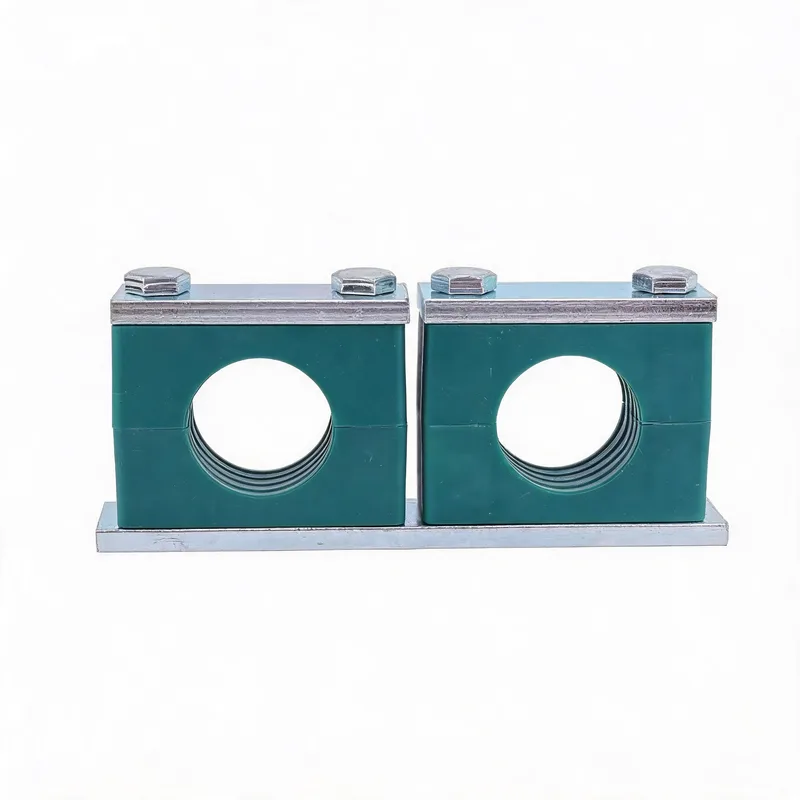
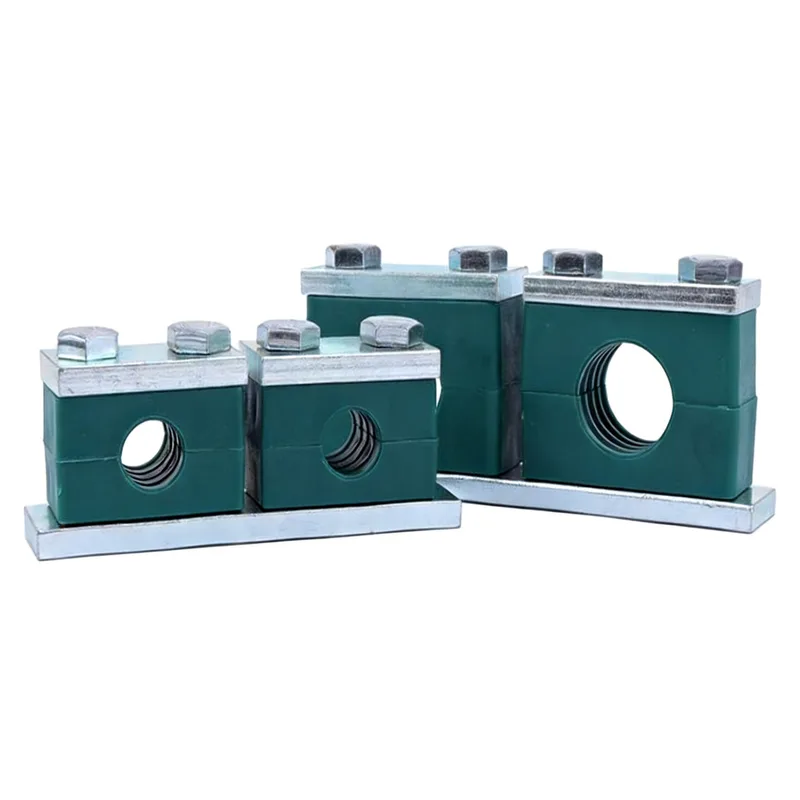
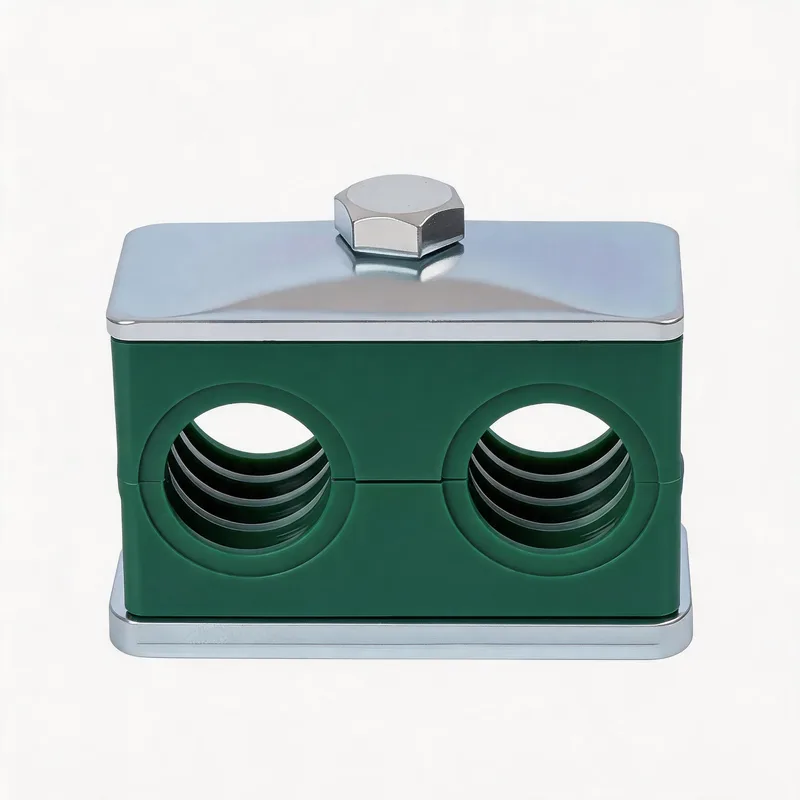
Twin pipe clamps are used when two parallel tubes need to be supported at the same point. In hydraulic systems, this often means paired supply and return lines, pilot lines, lubrication lines or compact manifold connections.
DIN 3015-3 twin series clamps help reduce installation width compared with two separate clamps, but the two lines still need to be checked for OD pair, pressure pulses, vibration, service access and clear identification.
Related product photos
Typical use cases
- Use twin clamps when two parallel lines share the same route and support spacing
- Confirm both OD values; mixed D1 and D2 pairs must be stated clearly
- Keep supply and return lines identifiable for service and troubleshooting
- Review vibration when lines are near pumps, cylinders or mobile frames
- Use separate clamps when lines need different movement, spacing or service access
Where twin clamps are useful
Twin clamps are useful on compact hydraulic power units, machine frames, mobile equipment, lubrication systems and manifold areas where two small or medium tubes run together. They help keep parallel routing tidy and reduce the number of mounting points.
Supply and return line pairing
Supply and return lines are often routed together, but they may not always have the same OD, pressure pulse level or temperature. When using a twin clamp, confirm whether both lines can share the same support stiffness and whether future maintenance requires one line to be removed independently.
Mixed OD pairs and D1/D2 data
A twin clamp quote should clearly state D1 and D2. If both lines have the same OD, mark it as equal pair. If the ODs differ, send both values, quantity for each pair and whether the larger line should be on a specific side for installation or identification.
When two separate clamps are better
Use two separate clamps when the two lines need different spacing, different expansion movement, independent removal, different materials or a large OD difference that makes a twin block impractical. Separate clamps may also be safer around high-vibration pump outlets or heavy hose transitions.
Mounting and spacing notes
Twin clamps still need a stable base, correct bolt length and proper spacing. Place supports near bends, manifold exits and valve connections, and avoid long unsupported paired runs where both lines can vibrate together.
RFQ information to send
For twin clamps, send D1 and D2 outside diameters, quantity per pair, line function if known, pipe material, fluid, pressure, temperature, vibration source, mounting method, rail or base requirement and whether the pair is a new installation or replacement.
Related WeiQue series
Recommended reading
References
These pages summarize public standard metadata and industry application information. They do not reproduce the paid DIN standard text.